The Legend of Hyeonmu
What is Hyeonmu?
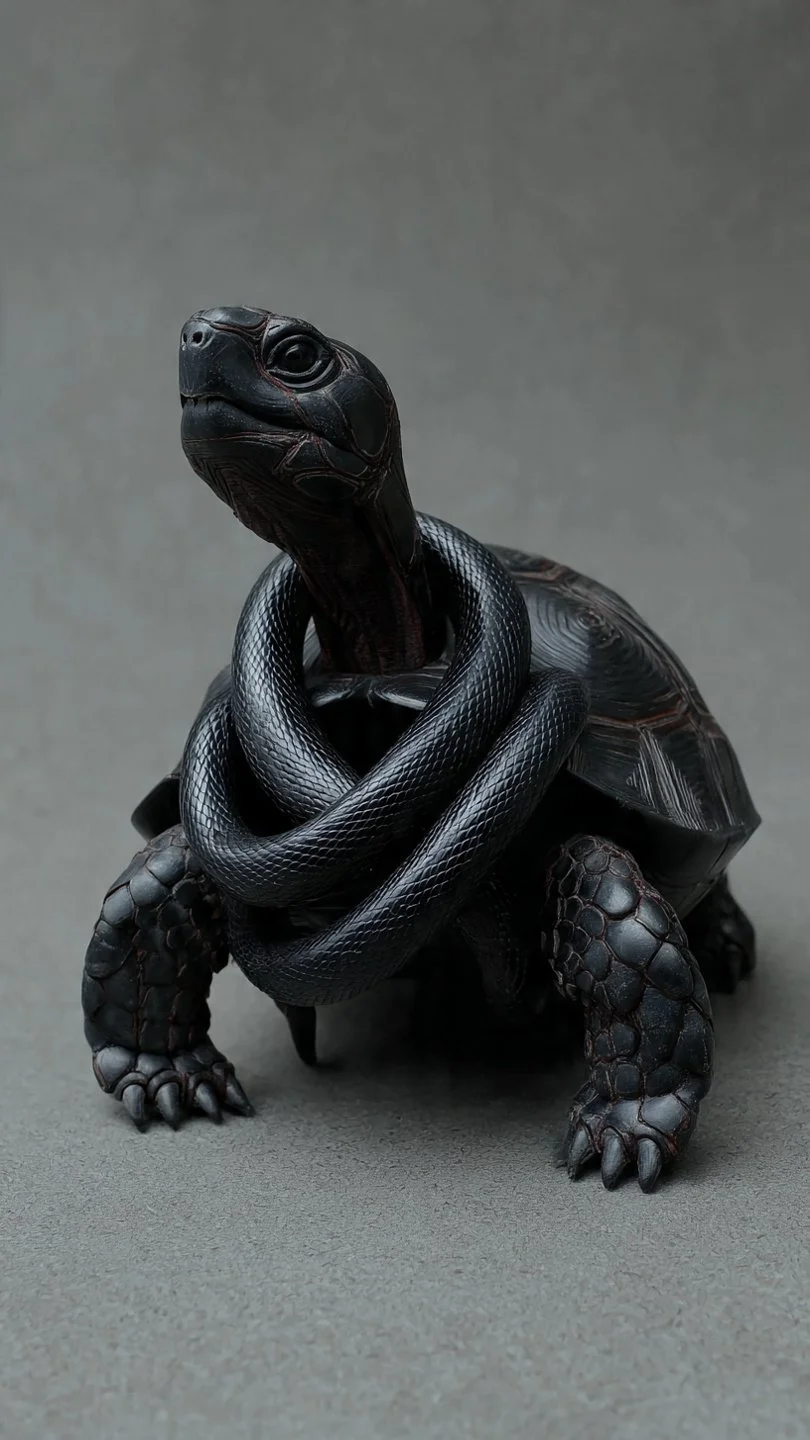
Hyeonmu (Korean: 현무, Chinese: 玄武 Xuánwǔ) is the Black Tortoise, one of the Four Symbols (사신 / 四象) in East Asian mythology.
It represents:
North
Winter
Water
Longevity and protection
Wisdom and endurance
Unlike a simple tortoise, Hyeonmu is traditionally depicted as a black tortoise entwined with a black serpent, symbolizing harmony between stability (tortoise) and dynamism (snake).
Origins in Myth
1. Guardian of the North
In Chinese cosmology (later adopted in Korea and Japan), the heavens are divided into four quadrants, each guarded by a divine creature:
Azure Dragon (East)
White Tiger (West)
Vermilion Bird (South)
Black Tortoise /Serpent: Hyeonmu (North)
Hyeonmu protects the northern skies and governs the winter season of rebirth.
2. A Symbol of Immortality
Tortoises were ancient symbols of longevity. Their long lifespan and hard shells made them associated with endurance, divine power, and protection. The serpent coiled around the tortoise adds the symbolism of renewal and transformation.
3. Korean Interpretations
In Korea, Hyeonmu is strongly associated with:
Dark northern mountains (Mount Bukak in Seoul was historically seen as the seat of Hyeonmu)
Protection of cities, especially in geomancy.
Many palace sites, temples, and tombs were oriented or designed with Hyeonmu’s protective role in mind.
🐢🐍 The Most Famous Legend
One notable legend describes how Hyeonmu ascended to divine status:
Long ago, a giant tortoise lived thousands of years and cultivated spiritual power. After assisting a great emperor—either by defeating a demonic force or by purifying a deadly flood—the tortoise was rewarded by the heavens. When it achieved enlightenment, its body transformed:
Its heart became the Black Tortoise
Its spirit became the Serpent
Together they rose to the sky as the divine guardian of the North
This merging symbolizes the union of yin and yang, stillness and motion, life and rebirth.
Hyeonmu in Korean Culture
Protective deity in Taoist-influenced traditions and shamanism
Appears in palace architecture, especially stone carvings
Frequently found on "Hyeonmu Gates" in historic cities
Used in talismans for protection and longevity
Even modern Korean culture references Hyeonmu in literature, games, martial arts, and films.
Symbolic Meanings
Hyeonmu represents:
Protection from evil
Resilience through hardship
Transformation and spiritual growth
Wisdom cultivated through endurance
Stability amidst chaos
Because of these qualities, Hyeonmu is often invoked as a guardian figure.
Contact us
Interested in working together? Fill out some info and we will be in touch shortly. We can’t wait to hear from you!